Wednesday, November 20, 2013

Winter Prep/Temp Greens

As we inch closer to the end of the 2013 season, we are putting the final touches on winter preparation for the course.  The irrigation system has been winterized and all plant protectants have been applied to playing surfaces.  Still, there are a few jobs remaining such as blowing and mulching the last of the leaves, bringing in the last of the amenities (rakes, tee markers, garbage cans etc.) and finally a winter blanket of sand topdressing for the greens.

Winter topdressing is a common practice at many northern courses but it has been done sparingly at BVGC in the past. Adding a heavy layer of sand to the greens just prior to snowfall or ground-freeze helps protect the crowns of the plant (growing points) for winter winds and can aid in thatch management and spring green-up.  Greens with shade and Poa annua (the two go hand-in-hand) are generally more susceptible to winter damage.  The use of protective tarp-style permeable turf covers can also accomplish this and more but: 1)are very expensive and labor intensive and 2)encourages Poa growth.  We will still be putting out the new turf covers we purchased this spring on holes 5 and 13 because they have a much higher population of Poa (70%) than the other greens and at this point, we need to ensure the plants survival even if it is encouraging the weaker grass species.


The downside to all of this is that all greens surfaces will be closed starting tomorrow, 11/21/13.  We will be placing temporary pins in approaches and near greens with the exception of all the par-3 holes.  There is limited room on all the par-3's due to water features or sand traps to place a temporary pin location.  All surfaces will be sanded and 5&13 will be tarped starting tomorrow.  At that time, we kindly ask that you do not hit to or walk on the putting surfaces for the remainder of the winter. We understand that the decision to put limits on where, when and how you use the golf course can be a sensitive one, especially since this is such a "new" process at BVGC but the benefits of turf health and better playing conditions outweigh the drawbacks of winter play on the greens.

Thank you for understanding.  As always if you have any questions please contact the golf shop or myself directly.  See you in 2014!

Friday, May 17, 2013

Crown Hydration and Winterkill

Let's talk about the current state of some of the greens here at BVGC. Some of the greens here experienced various areas of winterkill (more specifically crown hydration injury) over the late winter. Crown hydration is a situation where an extremely wet and snowy winter (especially late) combined with frequent warm-ups and re-freezing causes turf injury. The grass plants begin to take up water as the winter ends and the snow melts, but if cold temps and refreezing occurs the water will form ice crystals inside the plant and rupture it (i.e. blow it up from the inside). Annual Bluegrass (Poa annua) is especially susceptible to crown hydration injury.  Making things worse is the fact that shade enhances the problem: 1)more shade generally means more Poa and therefore a more susceptible grass species 2)more shade means slower snow melt and therefore more likely to have crown hydration injury due to refreezing.  

On to the factors that are specific to the greens and the crown hydration injury here at BVGC...First, we need to revisit the weather that was specific to Woodstock, not Ohare and not some lakeside Northshore club.  Reports of winterkill are numerous in central and southern Wisconsin.  The winter came late but came with a fury.  We received nearly 2" of rain on the last two days of January, followed by a rapid freeze.  This caused a layer of 6-8" of ice to accumulate on the green surfaces.  Prolonged ice cover can itself damage the turf, but it slows the melt process and enhances crown hydration injury.  From February 1 through late March we had several large snowfall events until things started to thaw towards the end of March.  I knew the prolonged ice and snow cover was going to be a concern and the staff on hand attempted to remove snow from several greens in mid-March to try to speed up the melt process.  It may have helped but ultimately damage has occurred on many greens here.  

Tuesday, February 19, 2013

Tweet Tweet

Wednesday, January 9, 2013

Miller

It is with heavy heart that I write this, but my beloved companion Miller known and loved by all here at BVGC passed away on January 4th.  He lived a great and enviable life, one where he was the star of the show at three golf courses and my companion for all but the first 8 weeks of his life.  He was the smartest, calmest and most well behaved dog I could ever ask for.  Miller was nearly 12 yrs old and was really in good spirits through the summer, but was diagnosed with lymphatic cancer in November and went downhill fast after that point. I knew he could not live forever and I did not want to see him suffer, so he was peacefully put down knowing that the last thing he saw was his good friend of all those years...You will never be forgotten. 


Enjoy the great goose chase in the sky!  

Tuesday, December 18, 2012

Tree Trimming

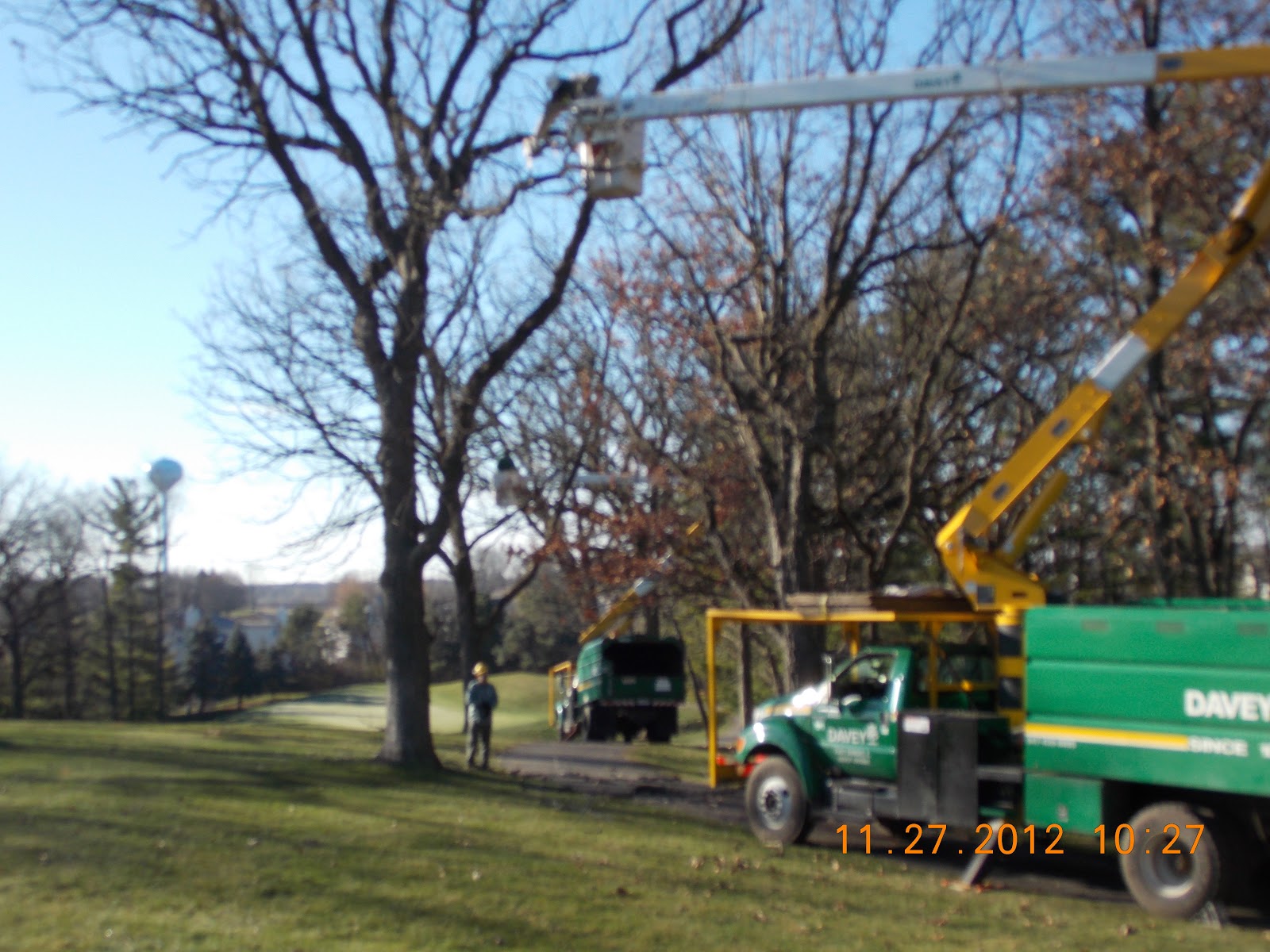
We had Davey Tree out for three days to help prune, trim and thin most of the oak trees on the course.  When done by tree experts removing dead wood and thinning out will help extend the life of the trees and make them safer for members and staff to play and work around.  We had originally planned for this to be done in March, but with the way the spring on came so early we missed our window as oaks should only be pruned before they leaf out or after they drop leaves.  

A good pruning should last 5-7 years for most of our tree species.  We plan to make yearly pruning and thinning a priority and we hope to cover 15-20% of our trees in one season.  Such a schedule will allow us to go through our entire tree inventory in that 5-7 year time frame, after which it will be time to start the cycle over again. We started with the oaks (and a few Hickory trees) as they are the most important specimens we have in terms of size, age, their visual impact on the hole and the way they affect how the hole is played. 


Friday, November 30, 2012

Late Fall Work

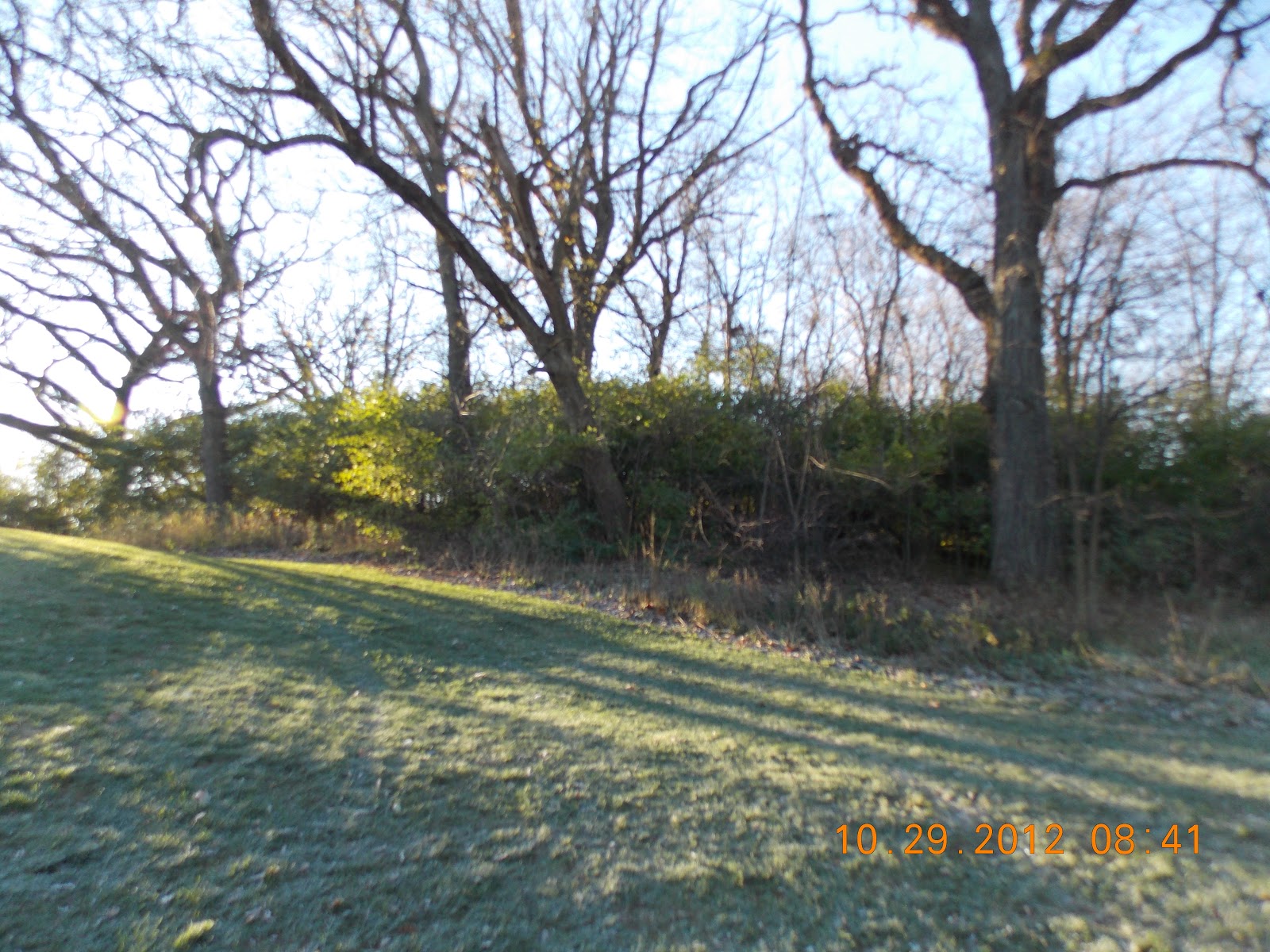
Some of the projects we wanted to get into this fall centered around restoring the native prairie areas of the course that have become overgrown with brush.  A month of frosty mornings has allowed us to clear out one of the largest and most infested areas of the course: the area between #7 green, #8 and #9 tee.


Here are some before shots...


Thursday, November 8, 2012

Irrigation Winterization

Today we begin the process of blowing out all the water from the irrigation lines using compressed air.  It's one of the major tasks we HAVE to complete before the snow flies and is one of the last few mile-markers we pass signifying the end of the 2012 golf season.  

We actually began the process over the preceding 3 days by shutting off the pumps and opening select valves to drain down the excess water as much as possible before the compressor arrived.  We move the compressor to various zones on the course and blow air section by section as we lack a large connection or inlet in or around the pump station that most courses possess. We hope to complete this task by Monday.